
The beginning
I wanted to fly to space since my early teenage. But sadly I was Russian from poor family. I was not able to get the degree even in IT. Lack of money forced me to work very early, so since 2002 I started to work as computer technician. In 10 years I grew up from ordinary technician to lead of IT department at medium-sized factory. Despite this, my dream about space flight was not light off.
The Startup
Lunar Journey was first space startup I joined.
It was year 2012. In HackSpace of St.Petersburg a team of motivated innovative enterpreneurs founded “New Generation Russian Space Startup”.
Actually, these enterpreneurs were three exalted youngsters, overestimating themself. One of them was “advanced PR specialist” who persuade everyone that with enough hype it’s possible to do anything. Second was “genius engineer”, being sure that modern CAD systems can help to solve any engineering problems. And the third one was “visionary”, who offered the core idea after a news TV cast about successes of Elon Musk, and being sure that with enough passion and stubbornness it’s possible even to fly to space.
This third one “visionary” was me.
The Logic
My dream about space flights not disappeared. At that moment I thought that I am not able to fly to space or join any space program… But – what if to found my own space program? In that case this would be a source of money for whole my life and, who knows, maybe I can fly to space somehow this way?
From this grew up a core logic, on which later based “Lunar Journey” project – rise funds from hype activity in space and turn them into solid business.
The Idea
The idea of startup was based on logic expressed above and formed under environment factors of early 2010s.
What we saw around us? YouTube with scientific shows. Total poverty in Russian space industry. Elon Musk with his SpaceX on TV. And additionally, early 2010s was a time of crowdfunding. Everyone “baked” projects.
By my opinion at that time, interest to space was just temporarily lighten down in people because of lack of interesting space missions. So what if to lighten it up with a mission, where everyone can be its part?
Idea of crowdfunding looked attractive. But what we could offer to people?
I supposed that this should be an impressive “live educational / space show”, interesting for any space geek. We had to develop mission of nano-probe (CubeSat with extended fuel tank) to the Moon, and offer to people an experience of participation in this mission. To do this, we should built ultralight launch vehicle (with a help of specialists form Russian space industry, to whom we planned to provide much higher salary than in post-soviet Russian space companies). Moon was chosen also with a purpose. At that time conspiracy about questions of US landing on the Moon was popular, so we expected to use its hype as well.
By the idea, bakers of the project appeared a “remote crew members” of our expedition. We planned to show to bakers all steps of development and flight. Moreover, we planned to provide to top bakers an experience of control of real spacecraft! Top funders should form a “mission council”, and they were able to control the flow of the mission. And after the end of the mission the spacecraft on the Moon orbit should be transferred to their property!

The Plan
So, I found out this idea and came to my friends. Together we developed a plan:
- Raise a hype about our project in social networks.
- Open crowdfunding campaign on KickStarter and other funding platforms.
- For money, gathered from bakers, found a company, where accumulate best and most active engineers from Russian space industry.
- Build ultralight launch vehicle and simple satellite with good communication system.
- Launch it to space and guide it to the Moon orbit.
After all this steps we would left with our own small but working space company, ready for doing real contracts for commercial customers. And for us that was the main goal of all this entrepreneurship.
I clearly understand now that this plan was crazy. But at that time I was 13 years younger… And there was no really experienced person to tell me what exactly was wrong.
The Failure
Of course, the plan failed.
We started with pompous words and great enthusiasm. We developed very basic requirements for our launch vehicle and satellite. We made a presentations and financial plans.

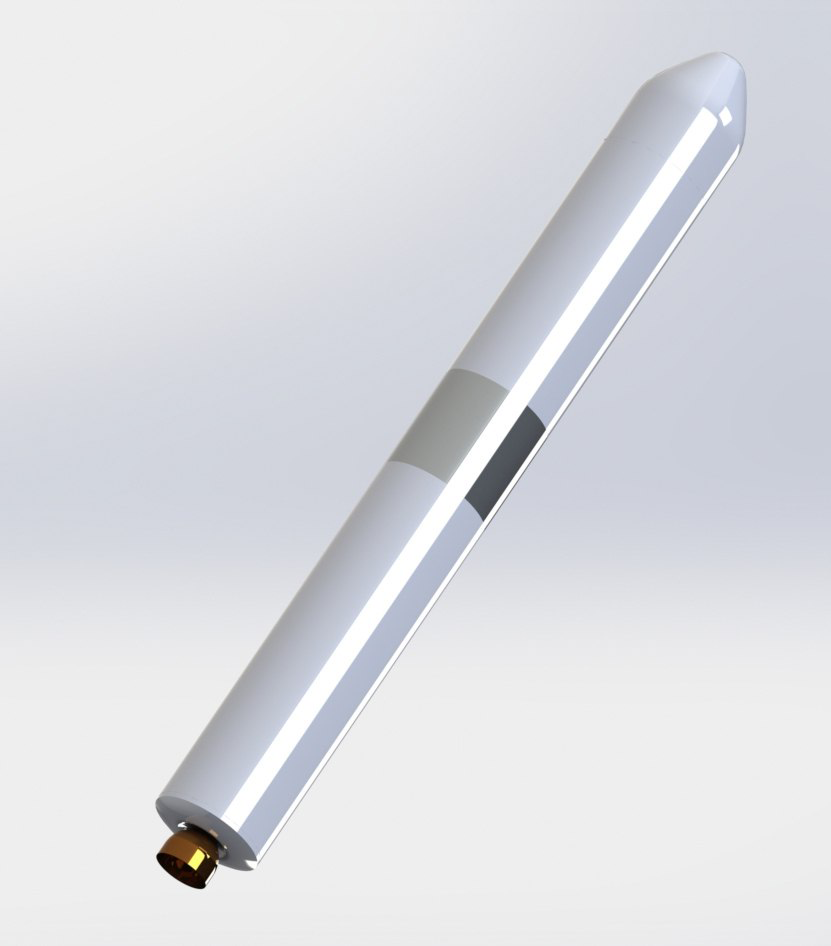
But with each page of paper we saw more and more clear – the process we’ve got into is much more complex than we expected.
Main things we faced were total neglect from common people who we expect to have as project bakers, and a mockery from experienced space engineers. Both groups see us as weirdos, doing nonsense.
Now I understand that they all were same stupid as we did. None of them all were able to explain authoritatively, why our idea is wrong. Common people and business specialists knew nothing about space, and space engineers knew nothing about business. Opinions of both of them sound for us irrelevant, empty. That’s why we continued.
We fought on this ground for about a year. Found out that KickStarted was not allowed Russians to raise funding. Tried to find contacts in Roscosmos, but found a rough wall of ignoring. Looked for help from Russian universities and found out that they will be ready for help only if we would pay them money…
So in the end of 2013 team and project fall apart. Expected, you’d say.
Conclusions
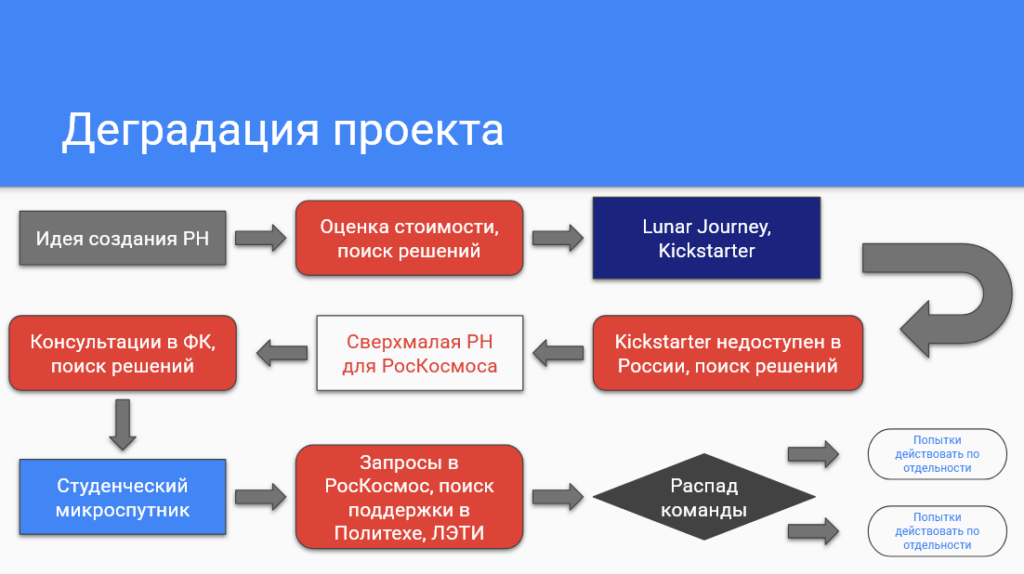
Now, many years later, I clearly understand that Lunar Journey project was not able to survive.
So, what exactly was wrong? I may determine five key mistakes:
- Wrong funding source
- Wrong audience
- Wrong marketing strategy (we acted “outside of market” – i.e., we don’t even understand that real market of space services existed!)
- Wrong methods
- Wrong image of space industry
- Misunderstanding the scale
- IT approach to a project
- “Expert systems” reliance
- Wrong mindset.
Note, that I said nothing about tech problems – we didn’t even get close to this!
Summarizing all above from my nowadays point of view – it was expected and necessary failure.