The beginning
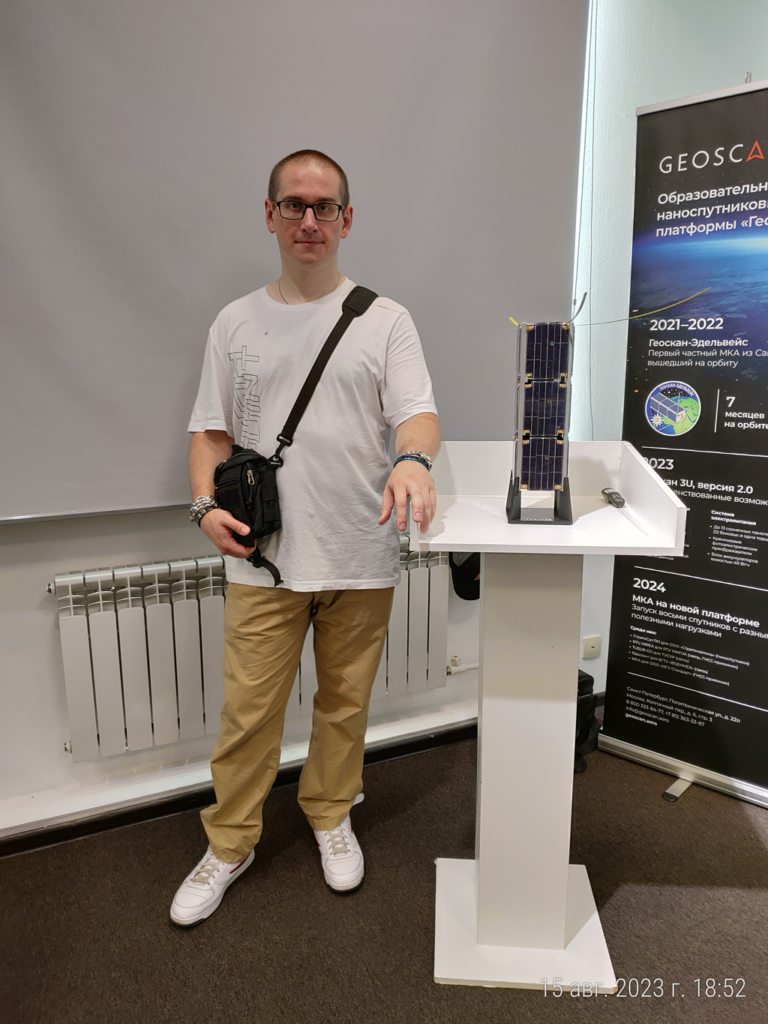
At August 2022, after launch of first satellite of Russian private space company Geoscan Group, I was on a presentation about this mission, named “Edelveis”.
Presentation was provided by Aleksandr Khokhlov – Head of Small Spacecraft Projects at Geoscan Group. I knew him since year 2016 – he was one of my mentors at retraining space engineering course for non-aerospace engineers, which I completed at Baltic State Technical University “VOENMEH”.
After presentation I came to him and his team to greet them with this success. Our conversation turned towards the questions of orbital mechanics. I volunteered to help with astrodynamics calculations – and they accepted me as a volunteer astrodynamicist!
Edelveis
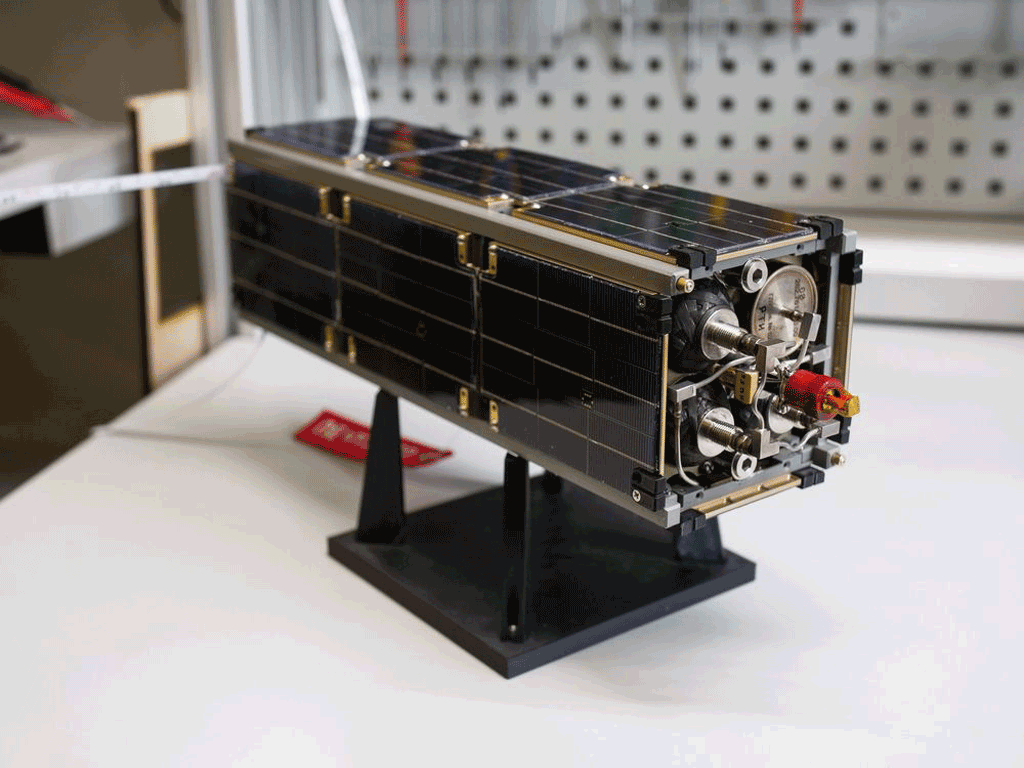
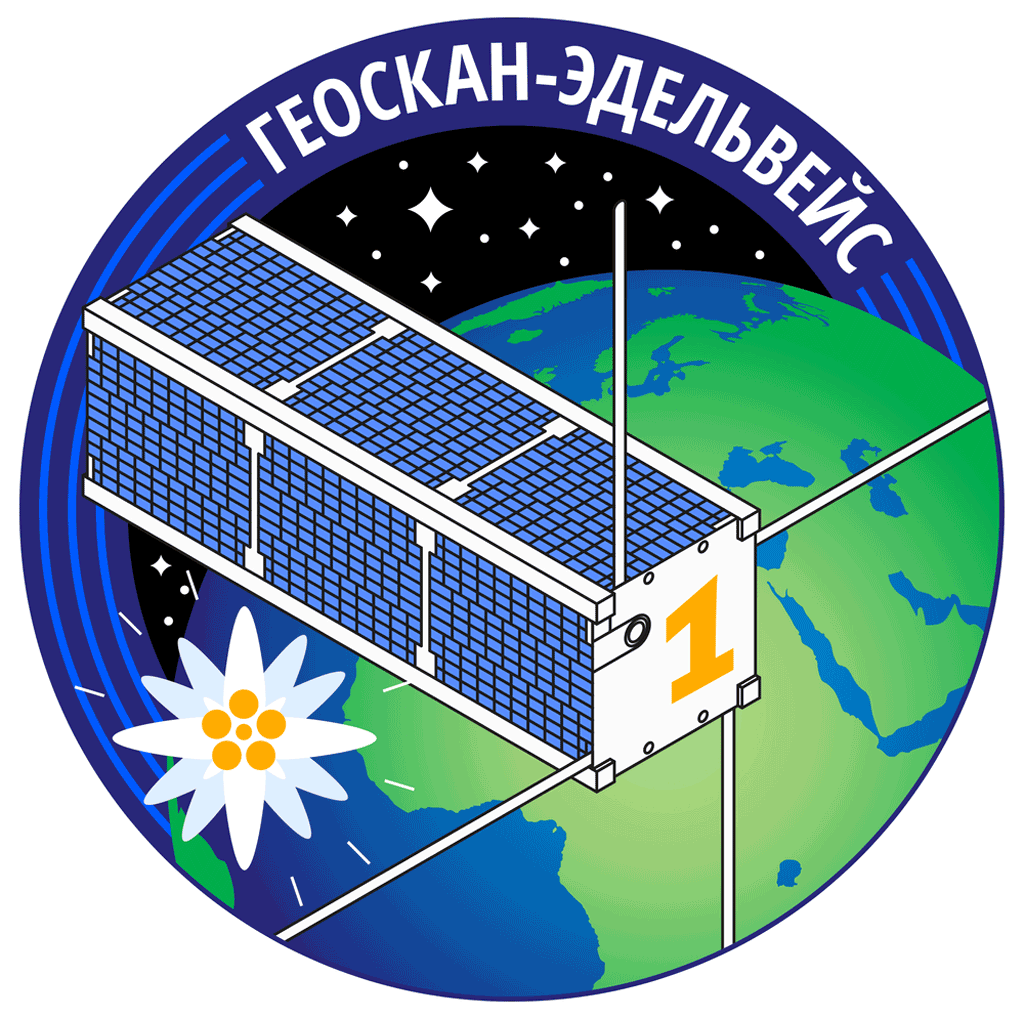
Edelveis (NORAD ID: 53385) was a small satellite, made in form-factor CubeSat 3U. It was same time testbed and a flagship of first series of Geoscan Group. Unlike many other 3U CubeSats, which sometimes are very primitive “flying sensors”, Edelveis was pretty feature-rich satellite. Its equipment included variety of sensors (optical, thermal, radiation), cameras, GPS module, number of RF transceivers, ACS (magnetorquer-based),and even real CGT – Cold Gas Thruster! I.e., it was really a miniaturized version of an “adult” spacecraft.
Most of equipment was made of Russian, non-imported components, and controlled by algorithms developed in Geoscan Group. This, after my experience with sounding rockets of Ultradyne Systems, especially increased my respect.
Of course, all this equipment never worked reliably and synchronous. But testing of all of this was one of main purpose of Edelveis mission. And this was the most interesting thing – the mission have distinctive vibe of real test flights, slightly mixed with taste of space piracy (because sometimes even the engineers was not sure how their systems will work together in real space environment, what brought an atmosphere of controlling of conquered alien spaceship, where you don’t know what to expect from its systems).
My Contribution
During my volunteering I…
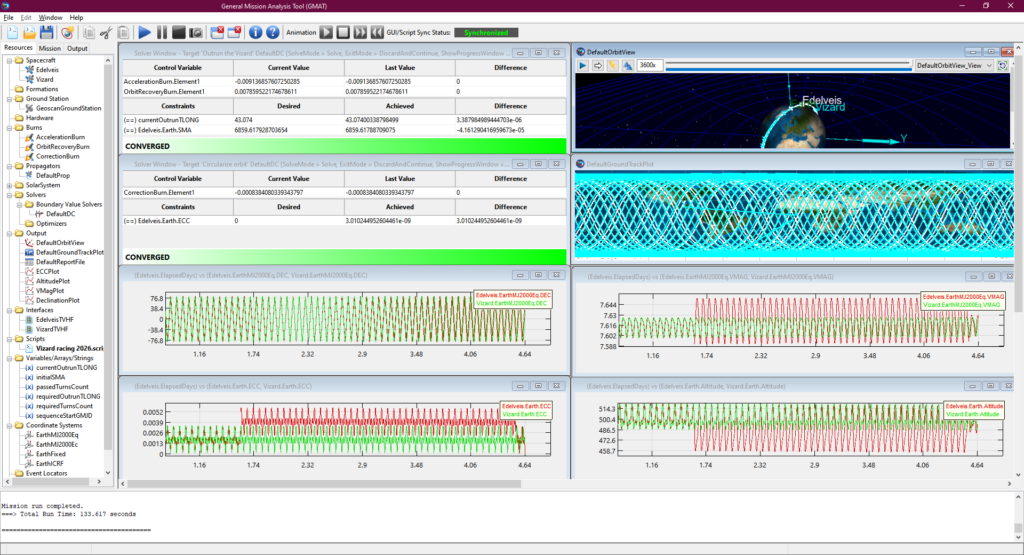
- Studied and modeled Edelveis flight trajectory – in GMAT and with my algorithms written in Python
- Assessed deviation of satellite states provided by TLE and by GPS sensor
- Developed options for test maneuvers (for CGT testing), including race with other satellite, Vizard
- Using provided documentation, studied configuration and design of CGT of the satellite
- Made math models of thrust and mass flow parameters of CGT in different modes
- Developed variety of methods of determination of actual of CGT
- Assessed attitude dynamics of satellite with enabled magnetorquers under effect of geomagnetic field, to esteem aiming direction of the camera of the satellite
- Using Unity3D, created simple digital twin/visualization of satellite attitude dynamics for cases of de-centered CGT nozzle position.
Conclusions
I followed Edelveis till the very end of its mission in February 2024. This was my first real space missions, but this experience gave me number of important insights, including:
- Practical experience of space flight from real space mission
- Understanding of practical work of an astrodynamics expert
- Experience of work with astrodynamics software
- Practical knowledge of testing process of space vehicles
- Understanding of mathematical methods of GNC
- Basic knowledge of system engineering of complex space equipment.
I am deeply grateful to Aleksandr Khokhlov, Edelveis mission team and Geoscan Group for this experience.