I already wrote about development and structure of Orbital AP I used in this simulated mission. But in previous posts I only briefly mentioned that development of autopilot stated in front of me problems which was very far from common technical questions.
During preparation for Operation “Silent Giant”, I understood that we needed not just a software, but something more than autopilot.
We needed a method to navigate real spaceflight constraints.
So I developed one, able to match strict requirements of fast-paced autonomous, highly dynamic space mission. But I did it not just with code.
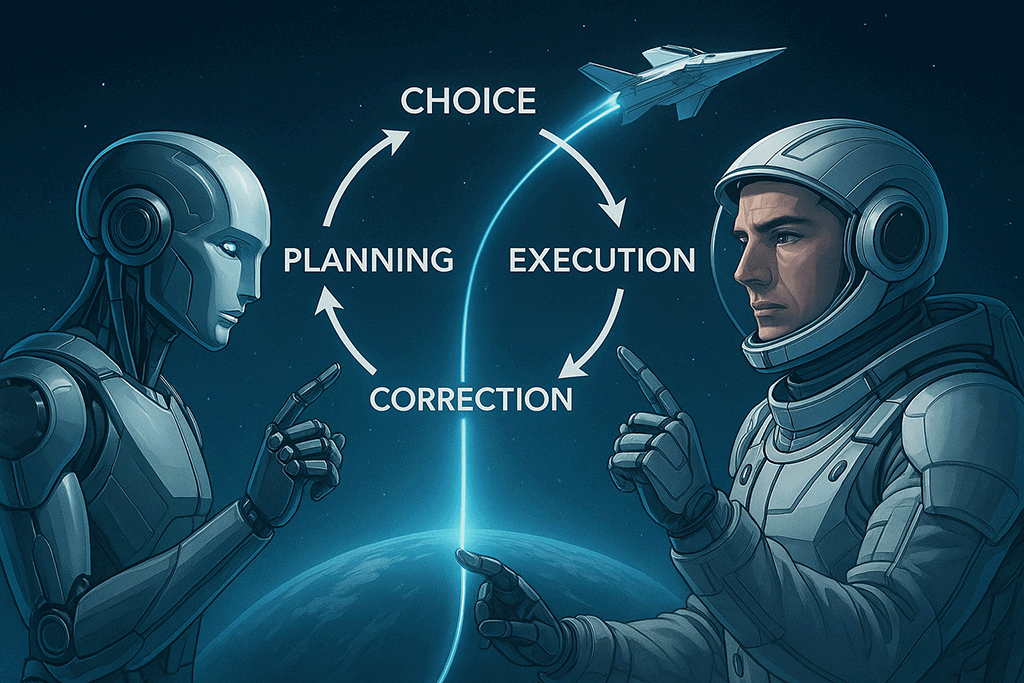
I built an architecture based on choices – on states and decisions shared between human and machine. I already briefly touched this topic in my previous posts, and now it’s time for a post especially dedicated for this.
In my system:
- A “choice” defines the next desired state in space and time.
- The human (astrogator) defines the choice.
- The machine plans, executes, and maintains it.
- When the mission context shifts, a new choice is made. Human and machine making this choice together.
This allowed me to build a system that:
- Unifies burns and corrections under one model
- Keeps the human in the loop without micromanaging
- Maintains clarity, auditability, and resilience
- Scales from simple transfers to multi-day missions
Our autopilot doesn’t just fly. It cooperates. It’s not just automation. It’s a dialogue between human and machine relying on wise insight of a human and on fast precision of a machine. Astrogator and autopilot working with choices together, bringing spacecraft wherever it needs.